Best Muscle-Building Stack
Sometimes you need a little help to get the most out of your lifts. These stacks can help turn your hard work into real gains.

Photo by Innerbody Research
Building muscle is supposed to be a simple equation. You lift weights and eat more than maintenance calories, and the muscle should grow. But it doesn’t always work this way, and certainly not the same way for everyone. Multiple factors, from your genetics to the quality of the food you’re eating, can get in the way of success in the gym, and even the most accomplished bodybuilders would want to improve their performance and results if they could.
That’s why so many people looking to put on and retain muscle will turn to supplements that claim to give them an edge.
Multiple clinical studies confirm that supplementation with protein, vitamins, specific amino acids, and other nutrients can help you get more gains out of the same amount of work in the gym.1 However, one supplement or protein powder on its own might not be enough, especially when you consider that different ingredients work better at specific times around your workout.
Muscle-building stacks account for this by breaking up vital nutrients into pills and drinks you consume at various points throughout the day. This allows you to maximize each benefit and lets the supplements work together to achieve desired results.
If you’re a little pressed for time, here’s a quick rundown of our favorite muscle-building stacks.
Summary of recommendations
Best overall: Custom stack from Kaged, Transparent Labs, and Naked Nutrition
Even though some companies offer discounts for bundling products together or curated stacks that cost less than individual components would, we’ve found that combining specific, top-tier products from multiple brands yields the most predictably beneficial combination of ingredients and doses for muscle growth, per the best science on the topic. The best part is, missing out on those discounts doesn’t make for an especially expensive stack.
Specifically, here’s what we recommend you combine:
- Kaged Pre-Workout Elite: a comprehensive pre-workout, available stim-free, with creatine, L-citrulline, and ElevATP
- Transparent Labs Mass Gainer: a high-calorie post-workout combination of carbs, protein, and fats close to an ideal recovery ratio
- Transparent Labs BCAA Glutamine: two of the best ingredients for recovery in one product
- Naked Nutrition Collagen Peptides: a core component of muscle and connective tissue made from grass-fed cattle at a low price
While this is the best possible combination of components we’ve found, you may still prefer the convenience of only dealing with one company for your stacking needs. Here are our top picks among brands that might fit a specific need:
- Best budget pick: Swolverine (L-Citrulline, Creatine Monohydrate, Whey Protein, BCAAs, and L-Glutamine)
- Best single brand for maximum efficacy: Kaged
- Best plant-based option: Swolverine (PRE, Creatine Monohydrate, Plant Protein, BCAAs, and L-Glutamine)
- Best-tasting: JYM System
- Best choice for women: Wellah (Pre-Workout, BCAAs, Grass-Fed Whey, L-Glutamine, and Multi-collagen)

Swolverine lets you pair a high-quality whey- or plant-based protein with targeted ingredients to maximize performance and spur muscle growth, all for a price others can’t match.
Our recommended combination of products from Swolverine provides four single-ingredient powders that can increase power output and endurance in the gym while improving recovery and muscle protein synthesis after a workout. And its protein powders offer complete amino acid profiles that are clean and tasty. Swolverine also sells some of these products on Amazon (notably, plant protein and BCAAs), though its prices are either identical or more expensive on Amazon.
In this Review
Why you should trust us
At Innerbody Research, we extensively test each health service or product we review, including muscle-building stacks. No one on our testing team is a professional bodybuilder or fitness model, but we try to exercise and eat well. Incorporating these products into our lives, even for a short while, allows us to report back to you about things like taste and efficacy, albeit at a subjective, anecdotal level.
But rather than just try the products and tell you if we liked them, our team also spent nearly 2,000 hours poring over hundreds of research papers looking into the various ingredients found in these stacks. That knowledge base, combined with our personal experience, makes this a review you can actually trust.
Additionally, like all health-related content on this website, this review was thoroughly vetted by one or more members of our Medical Review Board for accuracy. We’ll keep tabs on these supplements as they evolve and keep trying them for ourselves to make sure this guide stays current.
Over the past two decades, Innerbody Research has helped tens of millions of readers make more informed decisions about staying healthy and living healthier lifestyles.
Muscle-building stacks: top considerations
Choosing the right muscle-building stack for you depends on several factors. Here are the criteria we paid the closest attention to when making our selections.
Effectiveness
Advantage: Multi-brand combo curated by Innerbody Research
Several companies make prefabricated stacks they curate and sell for a discount, but they typically fail to maximize their own lineups’ potential to meet current exercise and recovery science to maximize muscle growth. Instead, they might offer a handful of products that could genuinely make a difference while leaving out other products in their catalogs that would make those stacks even better.
Simply put, the most effective combination of supplements to build muscle would include:
- A pre-workout with or without stimulants like caffeine, per your preference
- A meal replacement or mass gainer with the right macronutrient balance
- A creatine supplement if there isn’t any or enough creatine in the pre-workout
- A recovery-specific supplement to improve muscle growth and reduce soreness
Too often, companies that offer curated stacks might include a pre-workout and something for recovery, but they’ll leave out creatine or offer a simple protein powder instead of a meal replacement (the latter being superior for muscle growth), even when they have meal replacements available.
Given the shortcomings of these prefabricated stacks, we scoured the market to combine the best available products into a stack that contains four products from three different brands.
Here’s what it looks like:
- Pre-workout: Kaged Elite (stim, or stim-free)
- Meal replacement/mass gainer: Transparent Labs Mass Gainer
- Recovery support: Transparent Labs BCAA Glutamine and Naked Collagen Peptides
You’ll notice that there isn’t a dedicated creatine supplement here. That’s because you get 8g of creatine from combining Kaged Elite with Transparent Labs Mass Gainer, which contain 5g and 3g, respectively. That allows you to double down on recovery support with two of the best recovery products available: a combination of 8g BCAAs and 5g glutamine from Transparent Labs and a high-quality collagen peptide product at a low price from Naked Nutrition.
If you were to stick with a single company for all of your muscle growth needs, instead of combining brands as we’ve done here, we’d recommend Kaged. That’s because the company offers a 15% bundling discount on up to four products, its Clean Meal outperforms protein powders from the likes of Swolverine and Jym, and its pre-workout is one of the best in the business, even if you opt for the stim-free version.
Cost
Advantage: Swolverine
Swolverine used to offer some compelling prefabricated stacks, but the company has since replaced these with a dedicated bundling page on its website. Frustratingly, bundling through this page doesn't net you any additional discounts compared to buying products individually. That said, the company has a lineup of single-ingredient products it used to combine into an excellent stack built around its plant-based protein powder, and we’ve used that combination to curate a stack from Swolverine that offers reliable efficacy, a simple set of clean ingredients, and an outstanding price. Best of all, you can include either the plant-based or whey protein and get one of the lowest cost-per-serving stacks out there.
Specifically, you can combine the following from Swolverine to maximize savings without sacrificing efficacy:
- L-Citrulline
- Creatine monohydrate
- Protein powder (whey or plant-based)
- L-Glutamine
- BCAAs
The stack Swolverine used to sell in a similar form was married to the plant-based protein and included beta-alanine instead of BCAAs. Since beta-alanine can cause uncomfortable paresthesia in about 30% of users, we replaced it here with BCAAs to focus on reducing DOMS and improving recovery.44
Comparing costs with other brands requires a little added nuance, as well. Some companies provide 30 servings of every product, while others limit things like a meal replacement or pre-workout, assuming you’ll only want to take those on workout days.
To account for this discrepancy, we’ve created a chart that breaks down the cost of pursuing a three-month bulking phase, including 3-5 workout days per week, with the companies included in this guide.
Here’s how much it would cost to use these stacks consistently for three months:
| Best cost per month | Components | Total cost for a three-month bulk | Money-back guarantee | |
|---|---|---|---|---|
| Swolverine Custom Stack | $159 | 5 | $477 | None |
| Wellah Custom Stack | $139 | 5 | $417 | 60 days |
| JYM System | $167 | 4 | $501 | 30 days (must be 70% full) |
| Multi-brand Custom Stack | $190 | 4 | $570 | Varies by brand |
| Transparent Labs Custom Stack | $243 | 5 | $729 | None |
| Kaged Custom Stack | $178 | 4 | $534 | 60 days |
As you can see, you can get up to five high-quality components from Swolverine that all work together to maximize muscle growth for just under $160/month with a subscription. Wellah technically offers a better price on a five-component stack of similar ingredients, but its doses are lower across the board, as its products are intended for women. Those lower doses are adjusted for an average difference in body weight, which would require men to take larger quantities — and spend more to make up for it — when compared to products from Swolverine and others.
Now, this math is imperfect because you might not want or need to take every supplement in a given stack on a daily basis. For example, that stack from Kaged provides only 20 servings of its meal replacement, post-workout protein, and pre-workout, but 36-72 doses of its BCAAs, depending on your preferred dose. If you average five workouts a week and only want to take the pre- and post-workouts and meal replacement on gym days, then the stack will last you a month, with some BCAAs to spare. However, if your regimen is different, you may see slight variations in savings from one brand to the next.
Swolverine earns more points from us here, as the vast majority of its supplements come in 30-day supplies, making dose math and deployment much easier.
Safety
Advantage: Swolverine
Compared to taking steroids (which is not advised), most muscle-building stacks are incredibly safe. But some are safer than others. One important factor we look for is third-party testing. This ensures that any given supplement contains exactly what the company says is in it, with no contamination or dilution.
Swolverine and Transparent Labs go further than most other companies by subjecting their products to third-party testing and releasing batch-specific results to the public. You can compare the lot number printed on any product you receive to a long list on the companies’ pages. That will lead you to results detailing purity, dose accuracy, and microbial contamination.
Naked sometimes advertises a minimum of third-party testing, but the company doesn’t share the results of those tests on any public-facing webpage, nor does it provide them via customer service. Some of its products appear to lack any testing, while others boast being NSF Certified for Sport, which entails regular third-party testing. As for JYM, it does not perform third-party testing on its products.
Another safety point worth considering is simplicity. Swolverine deals in both complex mixes and individual ingredients you can use to simplify your stack. That helps ensure a low incidence of side effects while providing you with well-researched, effective ingredients.
We also made sure that the majority of companies in this guide kept sucralose out of their flavored drinks. Sucralose has been linked to things like increased tumor formation in some animal studies.2 There’s also evidence that it produces negative disturbances in gut bacteria.3 These studies typically use much higher concentrations than you’d find in everyday products, and they were conducted mostly in animals, but they’re still worrisome, to say the least.
Taste
Advantage: JYM System
By ordering these products for ourselves, we can speak to one of the most important things you’ll want to consider before buying them: how they taste. Granted, this is ultimately a subjective measure, but there were some unanimous findings among our testers that could easily sway your decision.
For example, on the protein powder side, JYM's Rocky Road was a runaway winner, and it really illustrates JYM's obvious attention to how consumers enjoy their products. For one thing, it tastes great in plain water (that allows you to save on both money and calories, if desired). The flavor itself is actually nuanced, too. Although it doesn't contain nuts à la Rocky Road ice cream, it actually provides a hint of nutty flavor in the background.

Photo by Innerbody Research
For another thing, it contains little marshmallows, a traditional Rocky Road ingredient. They're like the marshmallows you sometimes get in hot chocolate packets, and they taste like the marshmallows in Lucky Charms cereal. We had a similar experience recently trying JYM’s newest protein powder flavor, Chocolate Cookie Crunch, which, you may have guessed, contains little cookie pieces. What's more, a serving of either contains no more than 2g of sugar. That's thanks to the use of sucralose, which somehow doesn't give the mix the artificial taste typically associated with the sweetener.
But if you're looking to avoid sucralose for health reasons, go with Transparent Labs, whose protein powders and meal replacements are tasty, have much simpler ingredient lists, and use only stevia for sweetness. (JYM also offers naturally sweetened versions of its protein powders, pre-workouts, and post-workouts, but they aren't yet part of any stack, and they don’t taste quite as good.)
Convenience
Advantage: Jym System
Convenience in a muscle-building stack comes from a handful of places. It starts with a company’s website, ease of use, and customer consideration. Simple navigation, money-back guarantees, and privacy policies also play into this category. Flexible subscription options are also a big plus when available.
The easiest company we’ve dealt with in researching and purchasing a good stack has been Jym, mainly because it’s one of the few companies to offer well-curated, prefabricated stacks. There are a couple you could choose from that would work well for most muscle-building efforts, though we’ve identified the Jym System as the most likely prefabricated stack to help the most people.
We also particularly like that you can customize certain stack elements to deliver with more or fewer servings per shipment, allowing you to round out the number of doses you receive to align with your workout schedule.
How our top recommendations compare
To give you a quick overview of how our top muscle-building stacks compare to one another, we’ve put together this chart outlining their costs, included supplements and key ingredients, and other important variables.
As you can see, our multi-brand recommendation covers all of your bases for muscle growth in just four supplements, helping to control costs while maximizing potential impact. Kaged and Transparent Labs offer similar potential, but Kaged lacks collagen options in its lineup, and Transparent Labs is significantly more expensive if you stay in-brand. To be fair, Transparent Labs is the only company with multiple products in our multi-brand custom stack, but it’s still cheaper combining those with outside complements.
How do muscle-building stacks work?
To create muscle-building stacks, companies identify various supplements that can improve workout performance and boost results, combining them into an effective system. Instead of taking everything at once, you might take a daily vitamin supplement in the morning, a pre-workout before heading to the gym, and a protein powder or recovery aid after your lifting session.
As we’ve reviewed the science behind various supplemental approaches to muscle growth, we’ve seen that the most effective supplements typically take one of two approaches. One approach is to aid in recovery after a workout, providing the body with glucose to restore muscle glycogen, extra calories, and a balanced macronutrient load to improve muscle protein synthesis, or ingredients shown to reduce delayed-onset muscle soreness (DOMS) and improve joint health. The other approach is to increase energy and performance while in the gym, typically with caffeine, amino acids, and electrolytes.
However, there’s one ingredient we’ll explore below that doesn’t fit neatly into either of these categories but is among the most widely studied and successful muscle builders on the market.
Let’s take a look at the types of supplements included in various muscle-building stacks and how some of the ingredients you’re likely to find in them should work, starting with that very effective outlier: creatine.
Creatine
Creatine has been a favorite among bodybuilders for decades, and the scientific literature largely supports its use. A 2023 systematic review and meta-analysis looking into creatine’s role in muscle hypertrophy concluded that “creatine supplementation combined with resistance training promotes a small increase in the direct measures of skeletal muscle hypertrophy in both the upper and lower body.”30 That means there was a definitive improvement in muscle growth for participants adding creatine to their workouts, compared to those who didn’t, across ten qualified studies.
But unlike protein consumption and a calorically dense macronutrient balance that can spur muscle protein synthesis, creatine works through another mechanism. It actually causes your muscles to hold more water, which stresses muscle cells out enough to force them into further growth that training can’t achieve on its own.31 An added benefit to that extra intracellular muscle volume is that you’ll likely see a swelling in your muscles that’s greater than resistance training would provide without creatine, adding visible size to your muscles and potentially giving you a little motivational boost that your program is working.
Pre-workouts
Pre-workouts are usually drinks that either help give you more energy in the gym so you can perform at your best, or help protect your muscles from catabolism.1 That means your body won’t target your muscles for energy and potentially undo your hard work.
Common ingredients in pre-workouts include:
L-Citrulline
Small studies using lower doses of L-citrulline malate have shown some improvements in cycling performance and muscle soreness, though some larger-scale meta-analyses of aerobic performance have revealed mixed results, even with higher doses.35 36 Other large reviews have been more positive, especially at 8g/day and above.45 The trend in the literature seems to indicate that higher doses would be more effective, though many pre-workout supplements offer 6g or less. It’s better to take L-citrulline on its own, so you can control the dose, or seek out a pre-workout with a higher dose.
L-Carnitine
A 2018 study in resistance-trained men found that a 2g daily dose of L-carnitine could improve bench and leg press power while attenuating lactic acid buildup — benefiting both performance and recovery.37 These findings were supported by a later meta-analysis that confirmed L-carnitine's potential benefit even in acute doses of 3-4g.38
Caffeine
Caffeine might be an obvious one, but it’s worth looking at the research nonetheless. The International Society of Sports Nutrition has a position statement on the use of caffeine to enhance exercise performance. In it, the authors describe improvements for both trained and untrained individuals, specifically benefiting muscular endurance, movement velocity, and strength.39
L-Arginine
L-Arginine appears to work on nitric oxide production in the body, improving blood flow to carry more oxygen and nutrients to muscles in use. A systematic review and meta-analysis from 2020 confirms this and clarifies that L-arginine can benefit both aerobic and anaerobic performance, though doses for anaerobic benefit are significantly higher (10-12g/day instead of just 1.5-2.0g/day).40
Trimethylglycine (TMG), a.k.a. betaine
TMG is, among other things, a critical component of cellular energy metabolism, especially as a methyl donor within mitochondria.46 In a study on trained college athletes, a daily 5g dose of TMG improved power and maximal strength in various lifts.29 Another study, using a smaller 2.5mg daily dose, found improvements in exercise performance and a reduction in post-exercise cortisol levels in the treatment group.12 It has even been shown to improve anaerobic power, oxygen utilization, and sprint performance after two weeks of taking just 2g/day.47
Beta-alanine
A position statement by the International Society of Sports Nutrition supports the use of beta-alanine for improving exercise performance and attenuating neuromuscular fatigue.34 However, these findings relate to a 4-6g daily dose, while most pre-workout supplements contain a bit less.
Electrolytes
Electrolytes — sodium, calcium, and potassium, specifically — are critical for numerous aspects of exercise performance. Exercise causes a significant loss of electrolytes through perspiration, so loading up on them in a pre-workout is often a wise move.28 Standalone electrolyte drinks exist, but good pre-workout supplements often include some sodium and potassium, at least.
Essential amino acids (EAAs) and branched-chain amino acids (BCAAs)
Amino acids are the building blocks of protein, and consuming them has been shown to increase muscle protein synthesis.32 EAAs are the nine amino acids your body can’t produce on its own, while BCAAs are three from among those nine that have been studied for their synergistic effect in exercise performance and recovery. Ultimately, BCAAs have more substantial research linking them to recovery than to performance, but some research points toward a greater degree of efficacy when they’re taken before exercise, which is why they often end up in pre-workouts.4 33
β-Hydroxy β-methylbutyrate (HMB)
HMB appears to act on muscles in various ways in response to training, including the inhibition of protein degradation, decreased cell apoptosis, increased protein synthesis, and stimulation of growth hormone and insulin-like growth factor-1.41 Positive effects appear to occur regardless of age, sex, or training status.6 It’s often paired with creatine, but you’ll also find it in more complex pre-workout supplements.
Post-workouts (recovery)
Recovery supplements also often come in the form of drinks. They’re occasionally combined with your protein supplements but also regularly exist on their own. Like pre-workouts, their ingredients can guard against catabolism, but they can also provide your body with carbs to replenish glycogen stores spent during your training sessions.
Common ingredients in post-workouts include:
Glutamine
A 2014 study looking at markers of muscle strength recovery and soreness following knee extensions found that supplementation with 0.3g/kg/day of glutamine “resulted in faster recovery of peak torque and diminished muscle soreness following eccentric exercise.”42 That’s a very large dose, however — equivalent to about 21g/day for a 155lb person. Fortunately, a smaller-dose study in basketball players providing 6g/day found similar results.43
BCAAs
As we discussed earlier, the research supporting BCAAs for recovery is good, but it often points toward pre-workout supplementation as the ideal dose timing to maximize their effect.33 As such, they’re somewhat out of place in a post-workout, but you’ll often find them there.
Magnesium and glycine
A significant review showed a positive effect on muscle soreness and performance from magnesium supplementation.48 Meanwhile, a review looking at glycine identified its potential to stimulate muscle protein synthesis, improve muscle repair, and reduce soreness.49 We put them together here because some supplements provide magnesium glycinate, a form of magnesium that’s around 14% elemental magnesium and 86% glycine. You’d need some additional glycine to reach the effective doses shown in that review without breaching the recommended daily upper limit for magnesium, but these two ingredients are a nice pairing.
Taurine
Collagen peptides
Collagen peptides are among the few peptide therapies that boast good oral bioavailability. As a critical component of numerous body parts, from muscle and tendons to skin, supplementation has the potential to improve strength, functionality, and appearance.19 You may need to take up to 15g/day, however, which is one reason this ingredient is often sold on its own, rather than mixed in with other recovery aids.52
Protein powders and mass gainers or meal replacements
If you want to build muscle, you have to get enough protein, but balancing out your other macronutrients (fats and carbs) is also critical. For many, that means supplementation, as few of us have the time to prepare enough calorically dense, protein-rich, and macro-balanced meals every day. When bulking, you want a high-calorie protein powder that offers a complete amino acid profile.
Many protein powders try to deliver as much protein as possible with as few calories as possible, so users can more easily fit them into a diet deficient in the protein necessary for muscle-building. But ignoring carbs and fats isn’t ideal for recovery, making a mass gainer or meal replacement a superior choice for muscle growth.
In our guide to the best recovery supplements, we break down why mass gainers are your best bet to replenish glycogen stores and maximize muscle protein synthesis. The argument is grounded in scientific research that concluded you could get the best boost to recovery and protein synthesis with a carb-to-protein ratio of roughly 4:1 while taking in about 1.2g of carbs per kilogram of body weight every hour for about 2-4 hours post-workout.13
So, if you weigh 90kg, or about 200lb, you’d need a little over 100g of carbs and about 25g of protein every hour for about 2-4 hours after you finish your routine. Most protein powders offer the protein without much in the way of carbs or fats, but mass gainers and meal replacements deliver a better balance, typically a carb-heavy one closer to the ratio preferred by these researchers.
You can still rely on a stack built around a protein powder, but we recommend ensuring that a sufficient carbohydrate load is either part of the stack or part of your diet alongside it.
Testosterone boosters
In many men, an inability to put on muscle is tied to lower testosterone levels. In clinical studies, various ingredients found in testosterone boosters have been shown to increase testosterone.14 Even if you don’t have clinically low testosterone, a boost might help give you an edge in muscle repair and production.
Testosterone-boosting ingredients include:14 11
- Zinc
- Ashwagandha
- Tongkat ali
- Fenugreek
- Magnesium
- Vitamin D3
- D-Aspartic acid
If you think low testosterone could be the cause of your struggles in the gym, you can find out what your T levels are without leaving your house. Check out our complete guide to at-home testosterone testing for more.
Who should take a muscle-building stack?
Anyone looking to get the most out of their efforts in the gym may benefit from a muscle-building stack. Many people already use one or more of the supplements found in stacks, just not in combination. Some grab a pre-workout for an added boost in the gym or enjoy a protein shake afterward. But since buying a stack will often save you money compared to buying the supplements individually, the increase in cost to upgrade to a full stack is nominal.
So, if you use any kind of supplement in the hopes that it will increase your effectiveness in the gym and the gains you see from your hard work, it might be well worth your while to use a stack instead.
Who might want to look elsewhere?
Those working out primarily to lose weight might not find certain muscle-building stacks as beneficial as other solutions. Ingredients like creatine can cause water retention, and protein powders and mass gainers may contain more calories than you’d like to consume in a given day. Either way, those things can cause the number on the scale to go up, not down.
Lower-calorie protein powders and creatine-free pre-workout supplements can still play a role in weight loss, but you’d probably do better buying those things on their own.
Are muscle-building stacks safe?
Because of the wide variety of ingredients and caloric loads these stacks can deliver, it’s impossible to say that they’re all safe for everyone. Most of their ingredients are well-tolerated in the hundreds of studies we’ve reviewed, but there are some exceptions worth noting:
Nitric oxide boosters (citrulline, arginine, etc.)
This class of ingredients may present the most significant danger to men and women with heart conditions, as increasing nitric oxide can cause an unsafe drop in blood pressure, especially if you’re already taking medications to lower it.15
Ashwagandha
Mass gainers and protein powders
Mass gainers and meal replacements often have high caloric loads, which can lead to weight gain — both fat and muscle. Also, a recent study by Consumer Reports found that numerous popular protein powders and mass gainers contain unsafe amounts of lead per California’s strict Prop 65 rules.18 If that’s a concern for you, you might want to avoid these products and seek companies that subject their products to third-party testing to avoid lead contamination.
Creatine
While creatine supplementation is generally considered to be very safe, an initial high-dose loading phase (10-30g/day for 5-10 days) often causes some gastrointestinal (GI) discomfort in users.7 The problem tends to fade after the loading phase, and, if you’re patient, you can skip the loading phase altogether and just start out at a maintenance dose.5
Also, as with any supplement, it’s ideal to talk to your doctor before adding muscle builders of any kind to your regimen.
Multi-brand custom stack from Kaged, Transparent Labs, and Naked Nutrition
Best overall

Photo by Innerbody Research
Pros
- Delivers the top ingredients for muscle building across just four supplements
- Doses align with the best research into these ingredients
- Pre-workout is available with or without stimulants
- Meal replacement contains additional creatine
- Flavor options offer some of the best tastes in our guide
- Costs less than similar stacks from individual companies
Cons
- Servings per container are a little inconsistent
- Money-back guarantee differs from brand to brand
- Pre-workout is sweetened with sucralose
- Combination forces you to deal with three companies instead of one
If we’re going to suggest that you take the time to set up accounts with three different supplement companies to get the best possible stack for your money, we feel the need to justify that recommendation with its own dedicated section. We spent dozens of hours comparing the top workout supplements on the market with an eye toward muscle-building potential, overall cost, and the ability of one supplement to complement another.
It’d be nice if one company offered a discounted stack that combined this many relevant doses of this many high-quality ingredients, but that’s just not the case. The closest thing from a single company comes from Transparent Labs, makers of two of the four supplements in this custom combination. But staying with Transparent Labs for the other supplements isn’t ideal if you want to maximize efficacy and minimize cost.
Here’s a closer look at what our multi-brand custom stack entails and how the supplements work together to offer something truly special.
Kaged Pre-Workout Elite (we prefer the non-stim)
This pre-workout contains more L-citrulline than just about any other we’ve come across, at 10g. It also contains 5g of creatine, 3.2g of beta-alanine, and 300mg of alpha-GPC. There’s an electrolyte complex with coconut water powder to improve hydration and a 2g taurine dose to boot. If there’s one thing we dislike about it, it’s that it’s sweetened with sucralose, which isn’t the healthiest option. It’s also worth noting that there are only 20 servings per container, despite the fact that research into many of these ingredients supplies them to participants on a daily basis, often for weeks on end. That could impact efficacy or necessitate a more frequent delivery schedule, slightly increasing cost.
Transparent Labs BCAA Glutamine
You’ll often find BCAAs, glutamine, or both as individual stack components throughout this guide, depending on brand availability. But Transparent Labs realized that these two recovery aids are indispensable to a dedicated muscle-building regimen, so the company combined them into one product. That adds convenience and savings to the picture, and we’re big fans of the approach. It also helps that the drink tastes great and introduces another 1g of coconut water powder for more hydration support.
The 8g BCAA dose is appropriately divided into a 2:1:1 ratio of leucine to isoleucine and valine, and the 5g glutamine dose, while a little on the low side, is still likely enough for most users taking it daily to see a reduction in soreness.43
Transparent Labs Mass Gainer
At first glance, Transparent Labs’ Mass Gainer seems like a relatively normal product for its class. It offers a good ratio of macronutrients for muscle recovery and growth and plenty of calories to help you reach a surplus. But it’s in the fine print of the ingredient label where you’ll locate some of the things that take it to the next level.
In addition to the ingredients that provide its macronutrients, Mass Gainer delivers 3g of soluble fiber and another 3g of creatine monohydrate. Combined with the 5g of creatine in your pre-workout, this takes you to 8g/day, enough to support the muscle-building needs of men well over 200lb. And if you’re focusing that much on maximizing protein, any extra fiber will be a welcome addition to your daily bathroom needs.
Insider Tip: Mass gainers tend to be pretty big calorie bombs, and Transparent Labs provides more than 700 calories per serving here. There’s a good chance that you could get away with halving that serving alongside a healthy, protein-rich diet and see great results without spending quite as much. We recommend starting slowly when adding a meal replacement or mass gainer to your regimen to prevent excessive fat gain alongside muscle.
Naked Collagen Peptides
We rate collagen peptides pretty highly for health and wellness, especially in the exercise recovery and muscle-building spaces. You’ll rarely see collagen included in other supplements like pre-workouts or meal replacements, typically because effective doses start around 15g, and 30 servings of that takes up its own bottle long before other ingredients enter the picture.52
But collagen peptides are usually pretty inexpensive, and it’s not hard to find high-quality options. Transparent Labs has a good one, for example, but we opted to recommend Naked Nutrition here, instead. Both products are grass-fed bovine collagen peptides, and the protein-to-calorie ratios are nearly identical. But Naked’s product is simply less expensive, costing a little over $1 per serving compared to Transparent Labs’ $1.50.
Multi-brand stack pricing
While buying from three different companies complicates the process somewhat, it fortunately doesn't increase the price compared to other options from individual brands. Here’s a quick breakdown of what each product costs and what you can expect to pay monthly for the stack, assuming you only consume the pre-workout on exercise days (five per week) and you tailor the mass gainer to last about as long as we recommend above.
| One-time $ | Subscription $ | |
|---|---|---|
| Kaged Elite Pre-Workout (Stim-Free) | $60 | $48 |
| Transparent Labs BCAA Glutamine | $40 | $36 |
| Transparent Labs Mass Gainer | $80 | $72 |
| Naked Nutrition Collagen Peptides | $42 | $34 |
| Monthly total | $222 | $190 |
Kaged
Best single brand for maximum efficacy
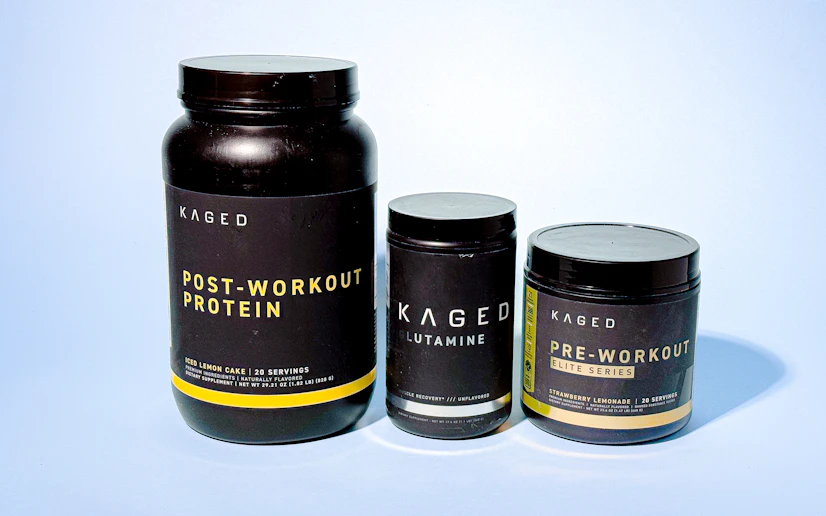
Photo by Innerbody Research
Pros
- Top-tier pre-workout available with or without stimulants
- Custom bundler saves you up to 15%
- Post-workout protein contains glutamine, betaine, and creatine
- Flavors are among the best we’ve tried
- Free shaker bottle with a minimum purchase
- 60-day money-back guarantee
Cons
- Bundler is limited to four products per purchase
- Some products are not available to be bundled
- No collagen peptides in the catalog
- Many drinks sweetened with sucralose
- Weight loss products are likely ineffective
As you might tell from its place in our top-recommended multi-brand stack, Kaged makes one of the best pre-workout supplements on the market in its Elite series. But if you’re intent on staying with one brand for simplicity’s sake, Kaged might also be your best bet. That’s because the company has a dedicated bundling page to help you curate a discounted bundle of up to four products.
If you were to build a stack through Kaged, we’d specifically recommend the following:
- Kaged Pre-Workout Elite (stim or non-stim)
- BCAAs
- Re-Kaged Post Protein
- Clean Meal
That stack would cost $178.16 on a subscription basis.
If you don’t think the 5g of creatine in the pre-workout is enough for you, you could always add more from the company’s diverse creatine selection, which includes two forms other than monohydrate for users with sensitive stomachs.
Taste and mixability
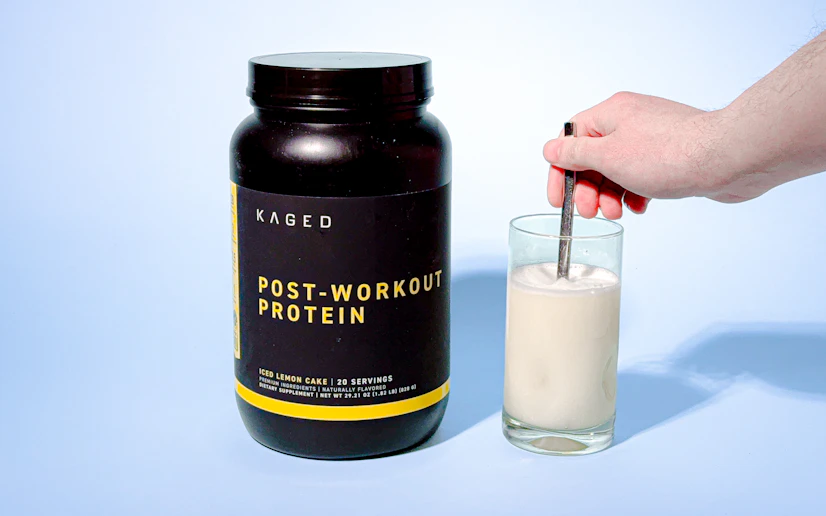
Photo by Innerbody Research
Kaged does a good job curating its flavors. The pre-workout dissolves relatively well and has a bright pleasant punch to it, while the protein powders require a bit more liquid to really blend well unless you’re using a blender. Our shaker bottles did an okay job, but there was some minor clumping. The protein and meal replacements both tasted great, however, with the meal replacements’ Vanilla Cake and protein powder’s Iced Lemon Cake flavors really pleasing the testing team.
Insider Tip: In our rounds of testing, we found that combining one scoop of the Lemon Cake-flavored post-workout protein with 6oz. of low-fat cottage cheese created a delicious, protein-rich snack that tastes a lot like cheesecake.
Shipping and returns
Subscriptions and orders over $70 ship for free, which is a pretty average free-shipping threshold in this area. What’s above average is Kaged’s return policy, which is a full money-back guarantee for 60 days. That’s tied for the longest guarantee in our guide with Wellah, whose doses are more targeted to women and their statistically lower BMIs. So, for men seeking higher doses with a good guarantee, Kaged takes the vanilla cake.
Swolverine
Best budget pick and best plant-based stack

Photo by Innerbody Research
Pros
- Vegan and whey proteins available
- Often uses single ingredients instead of complex blends
- Made in the United States
- Clinical studies provided on each product page
- Batch-specific certificates of analysis available
Cons
- Bundle builder doesn’t provide any savings
- Good-quality prefabricated stacks have been retired
- Catalog lacks a meal replacement or mass gainer
- No returns on opened products
Swolverine has an impressive supplement catalog that includes products designed for muscle building, fat loss, performance improvement, and even gut health.
The company makes a point to be as transparent as possible.
- It doesn't employ proprietary blends.
- It provides certificates of analysis on all its supplements.
- It offers several single-ingredient products, making it easier to determine which product is working for you than if you took a single scoop of 30 ingredients.
Swolverine used to offer three muscle-building stacks. Two of them were fully vegan, and all three were stimulant-free. All three have been removed from the company’s website in favor of a custom bundle builder, which is a nice gesture until you realize that the bundler provides no additional savings compared to buying products individually.
Our recommendation for a stack from Swolverine is based on the company’s previous Vegan Build stack, though we’ve made some adjustments, like opening the stack up to include whey- or plant-based protein. That stack was a great collection of single-ingredient supplements arranged around a protein powder.
Specifically, here’s what we recommend you pick up from Swolverine in a stack:
- L-Citrulline malate
- BCAAs
- Protein powder (whey- or plant-based)
- L-Glutamine
- Creatine monohydrate
These five components have the potential to improve performance and recovery while spurring on muscle protein synthesis. However, it’s important to note that Swolverine doesn’t have a meal replacement or mass gainer in its lineup, and a simple protein powder might not be enough to help you get into the caloric surplus typically required for muscle building.
That collection comes in at a great price, especially when you subscribe: $158.91.
You can elect to upgrade certain components here, like swapping out the L-citrulline for Swolverine PRE, a relatively simple, stim-free preworkout. You could also opt for Swolverine ZMT, the company’s nighttime recovery supplement and testosterone booster. ZMT contains ingredients designed to promote deep, restful sleep, which is essential for muscle recovery and also plays a role in fat loss and overall mental health.22 23 24 No other stack in this guide offers a product focused on improving sleep.
Here’s a quick look at the full list of ZMT’s ingredients:
- Vitamin B6: 25mg
- Magnesium: 422mg
- Zinc citrate: 50mg
- L-Taurine: 1,000mg
- L-Theanine: 500mg
- L-Tryptophan: 500mg
- Ashwagandha root extract: 300mg
- GABA: 100mg
- Valerian root extract: 100mg
- Tongkat ali root extract: 50mg
- Rhodiola rosea root extract: 50mg
- DIM (3,3'-Diindolylmethane): 50mg
- BioPerine: 5mg
- Melatonin: 3mg
Melatonin on its own is typically enough to get most people to sleep,25 but combined with valerian root and L-tryptophan (each of which affects your serotonin levels), it becomes an even more powerful sleeping aid.26 The downside of this is that melatonin and other hypnotic sleep aids can result in next-day grogginess — sometimes called a melatonin hangover — that can be counterproductive to why you took a sleep aid to begin with. 55
ZMT also includes ingredients that may help normalize testosterone levels, including ashwagandha and zinc, both of which have been shown to increase testosterone levels in clinical studies.20 27 That translates to more than 15mg of elemental zinc in ZMT.
Taste and mixability
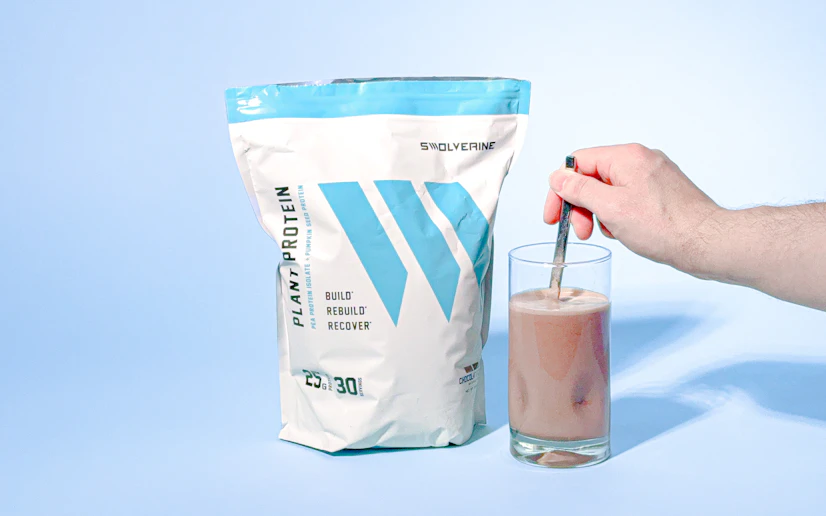
Photo by Innerbody Research
With so many single ingredients in our recommended Swolverine stack, there’s a little less to say about taste and mixability. Things like creatine are relatively flavorless and mix well enough into water that not too much sediment is left behind afterward. L-Citrulline adds a pleasant sourness to plain water that makes it a simple and enjoyable pre-workout to consume. And both plant- and whey-based protein options from Swolverine deliver strong chocolate profiles in that particular flavor, which our testers appreciated.
Shipping and returns
Swolverine offers free shipping on all U.S. orders over $100. Any combination of four or five effective muscle-building products should meet this threshold.
Swolverine’s return policy isn’t as good compared to some of its competitors. It gives you a 30-day window to initiate a return but doesn't accept returns on opened products. That means you can really only return something if you change your mind before even trying it out. That said, the company states that it processes returns on a case-by-case basis and that there’s some leeway in certain scenarios. Still, we far prefer the approaches by Wellah and Kaged, both of which offer 60-day full money-back guarantees.
JYM
Best-tasting

Photo by Innerbody Research
Pros
- Protein powder is exceptionally tasty
- High-dose fish oil available
- Multiple size and flavor options
- Stacks are partially customizable
- Comes with nutrition ebooks
Cons
- Creatine is unnecessarily split between pre- and post-workouts
- Stacks ineligible for subscriptions
- Caffeine dose may be too high for some
- No stim-free options
- Every stack includes artificial flavors and sweeteners
- Naturally sweetened and flavored alternatives exist, but not as part of stacks
JYM has an impressive array of supplements aimed at improving your fitness, performance in the gym, and recovery. The components in the JYM System stack might make it a better choice for muscle growth than the company’s two dedicated muscle builders. This depends a little bit on your diet apart from the stack.
JYM’s Muscle Building Stack consists of a protein powder, pre- and post-workouts, and a fish oil supplement. It costs $152.96 with 22 servings of its protein powder or $179.96 with 45 servings. Its Hyperemia Muscle Stack contains only three supplements: the protein, a newer “Extreme” pre-workout, and a fast-absorbing high-glycemic carbohydrate drink. It costs either $112.47 or $139.47, depending on protein size. (Consuming high-glycemic carbs after an intense workout has been shown to improve sleep and overall recovery.)8
The JYM System Stack contains the protein powder and fast-digesting carbs along with pre- and post-workouts. That makes it the most well-rounded option in the lineup. It costs $139.46 or $166.46, depending on protein size.
If you eat a healthy, high-protein diet that contains foods like wild-caught salmon, sardines, and anchovies, you may not need the fish oil supplement.
Let’s look at each component in the stacks to better understand what JYM has to offer.
Pro JYM Protein Powder
You can get JYM’s protein powder in 2lb or 4lb jars, depending on your needs. One 2lb jar delivers 24 servings, which is enough if you only consume it around workouts. If you want to supplement your daily protein intake, you might want to opt for the larger jar. It comes in eight flavors:
- Cookies and Cream
- Banana Bread
- Chocolate Peanut Butter
- Rocky Road
- Chocolate Mousse
- Tahitian Vanilla Bean
- Strawberry Milk
- Chocolate Cookie Crunch
There used to be a Root Beer Float flavor, as well, but that has been removed from the catalog.
JYM uses a blend of protein sources for its powder that looks like this:
- Whey protein isolate: 8.5g
- Micellar casein: 7.75g
- Milk protein isolate: 7.75g
With just 150 calories, 3.5g of fat, and 6g of carbs per serving, this is certainly a protein powder first, not a meal replacement or mass gainer like Transparent Labs Mass Gainer is. It can augment your diet, but you’ll still need to eat an abundance of well-balanced macronutrients throughout the day.
Pre JYM High-Performance Pre-Workout
JYM’s pre-workout provides plenty of energy to get you through a training session. The lion’s share of that boost might come from the 300mg of caffeine in each serving. Considering that JYM doesn’t offer a non-stim option, this seems like more caffeine than necessary for most lifters. And anyone sensitive to stimulants will be out of luck.
The highlights of JYM’s pre-workout ingredient list include:
- Citrulline malate: 6g
- BCAAs: 6g
- Creatine HCl: 2g
- Beta-alanine: 2g
- Betaine: 1.5g
- Beet root extract: 500mg
- Caffeine: 300mg
- Alpha-GPC: 150mg
- Huperzine A: 50mcg
- BioPerine: 5mg
While nearly all of these ingredients should help boost energy levels, provide enough of a push to gain a rep or two per set, and promote muscle preservation, the BioPerine is one of the most interesting. It’s there to increase the bioavailability of the rest of the ingredients so your body absorbs them more thoroughly.9
You can get JYM’s pre-workout in 20- or 30-serving tubs in the following flavors:
- Tangerine
- Grape Candy
- Pink Lemonade
- Rainbow Sherbert
- Pineapple Strawberry
- Black Cherry
- Strawberry Kiwi
- Raspberry Lemonade
- Cherry Limeade
- Orange Mango
- Blueberry Pineapple
Post JYM Recovery Matrix
JYM’s post-workout has a few of the same ingredients as its pre-workout, as well as a handful of others that can help speed up recovery and promote muscle growth. The list includes:
- BCAAs: 6g
- Glutamine: 3g
- Creatine HCl: 2g
- Beta-alanine: 2g
- L-Carnitine L-tartrate: 2g
- Betaine: 1.5g
- BioPerine: 5mg
JYM’s post-workout contains enough powder for 30 servings, and it’s available in seven flavors:
- Blue Arctic Freeze
- Lemonade
- Mandarin Orange
- Rainbow Sherbet
- Bombsicle
- Fruit Punch
- Watermelon
Post JYM Dextrose Carbs
It might seem strange to drink such a sugary beverage right after putting in a lot of work at the gym, but if your primary goal is building muscle and you work hard enough to burn the associated calories, you could see some significant benefits from doing so. Specifically, this works when it’s a high-glycemic index drink. That means it gets into your system quickly. It’s the opposite of what you’d want if you‘re diabetic, but if you have a healthy sensitivity to insulin, you should be okay.
Studies suggest that high-glycemic-load carbs consumed after an intense workout can be a boon to recovery. Specifically, they can help prevent the more energizing aspects of good gym work from interfering with your sleep.8 And if you’ve completely raided your muscles’ stores of glycogen through a lifting session, this can replenish them quickly, allowing you to maintain greater strength in future workouts throughout the week.
Dextrose is the primary ingredient here, delivering a 29g dose of sugar. The supplement is available in the following flavors:
- Blue Arctic Freeze
- Lemonade
- Mandarin Orange
- Rainbow Sherbet
- Unflavored
Omega JYM
Given the multitude of potential benefits your body can reap from omega-3s — especially in the gym — it makes a lot of sense for a company like JYM to include an omega-3 supplement in its stacks.10 This fish oil-derived option includes the three main omega-3s — DHA, EPA, and DPA. The company packs a lot of each into its capsules, so the serving size is just two pills twice daily.
Here are the measurements of the omega-3s in Omega JYM:
- DHA: 1,500mg
- EPA: 1,500mg
- DPA: 300mg
This supplement is part of the JYM Muscle Building Stack but not the System Stack. We think both stacks are good choices, but we prefer the combination of the System stack with a healthy, protein-rich diet including lots of fish.
Taste and mixability
Taste was our favorite aspect of JYM’s offerings, particularly its protein powder. We weren’t terribly impressed by its pre- and post-workouts, but they were more or less on par with similar products from other companies.
But the protein powders mixed wonderfully into plain water and had rich, complex flavors. They were most enjoyable!

Photo by Innerbody Research
JYM takes extra steps to make them taste so good. Take, for instance, the small, hard marshmallows in the Rocky Road flavor. Like the marshmallows in a good hot cocoa mix, these were firm enough to stay intact after 15 seconds of intense shaking in a shaker cup.
Shipping and returns
JYM offers free shipping on all orders over $100. That means any of its muscle-building stacks will ship to you for free. The return policy is a little more disappointing. The company offers 30 days for its money-back guarantee, but it also demands that your products still be at least 70% full. That means you can likely return something because you don’t like how it tastes, but you’re unlikely to know whether it would have worked well for your muscle-building goals.
Wellah
Best choice for women

Photo by Innerbody Research
Pros
- Doses are tailored to account for lower body weights
- Pre-workout contains creatine
- Collagen delivers types I, II, III, V, and X
- BCAA drink contains electrolytes
- Most flavors are enjoyable and well-balanced
- 60-day money-back guarantee
- Free shipping on all orders
Cons
- Some added ingredients lack good scientific support
- No apparent third-party testing conducted
- Pre-workout is only available with caffeine
A great deal of the research into things like muscle protein synthesis, aerobic performance, and strength looks at ingredients measured with respect to bodyweight. Instead of a blanket dose being used across a study, you might see 1.2g/kg of body weight (a reference for carbs used in muscle recovery).
That’s a very different dose for the average man compared to the average woman. In the U.S., at least according to the CDC, men weigh an average of about 200lb (90kg), while women weigh closer to 170lb (70kg).54 That would result in a 108g serving of carbs for men, but only an 84g serving of carbs for women. That’s about 100 calories, to boot.
To account for these differences and make it easier and less expensive for women to manage exercise performance supplements, Wellah curated its products with slightly lower doses than what you see in the average stackable supplement. The savings are moderate, but the increase in convenience is noteworthy, as you can rely on the scoops provided for things like pre-workouts and protein without having to break out the calculator and kitchen scale.
If you’re going to construct a muscle-building stack from within Wellah’s catalog, we recommend the following:
- Pre-Workout + Creatine
- Grass-Fed Whey
- Multi-Collagen
- BCAAs + Electrolytes
- L-Glutamine
Taste and mixability
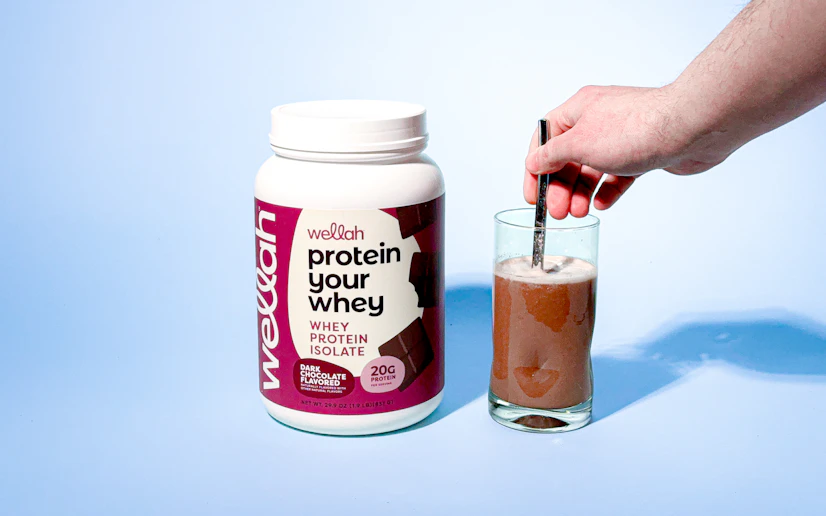
Photo by Innerbody Research
Wellah delivers on flavor almost as well as Jym, especially with its whey protein powder. The Dark Chocolate flavor in particular is outstanding, with a clean, rich chocolate taste that works as well in plain water as it does in almond milk or Greek yogurt. The collagen peptides are a little less exciting, with the multiple collagen sources resulting in a little background bitterness, but the pre-workout more than makes up for this. It mixes well, and the flavor is bright and enjoyable.
Wellah pricing, shipping, and returns
The curated stack we outlined above will run you $154 for a one-time purchase or just $139 for a subscription. You might be able to get away without the L-glutamine if your regimen in the gym isn’t leaving you especially sore, as well. That would reduce your cost by another $22.
Wellah is also tied with Kaged for having the longest money-back guarantee in our guide, at 60 days. That’s plenty of time to know how these supplements might fit into your routine. Add free shipping on all orders, and it becomes clear that Wellah took a stern look at its customer service and made sure it took care of its base at every turn.
Transparent Labs

Photo by Innerbody Research
Pros
- Makes two of the top supplements recommended in this guide
- Mass Gainer includes 3g of added creatine
- Only company here to combine BCAAs with glutamine
- Also combines creatine and HMB for added muscle growth
- Extensive third-party testing with readily available results
Cons
- Most expensive stack in our guide
- High free shipping threshold
- No money-back guarantee
Despite having two products featured in our top-recommended multi-brand stack, Transparent Labs didn’t earn a dedicated spot in our summary of recommendations. Its products are a little too expensive to compete for a best budget pick, its pre-workouts can’t compete for efficacy with Kaged and some others, and its flavors are mostly just fine. It makes the best mass gainer to combine with products from other companies, and its decision to combine BCAAs and glutamine into a single supplement is genuinely inspired. But for muscle-building, that’s where the magic ends.
All that said, since those two products are so outstanding, you might want to simplify your life and create a stack made up completely of Transparent Labs products. If you were to do so, here’s what we’d recommend:
- Stim-Free Pre-Workout
- Creatine HMB
- Mass Gainer
- BCAA Glutamine
- Collagen Peptides
It’s no surprise that BCAA Glutamine and Mass Gainer are on the list, as they’re central to our multi-brand recommendation. And we also discussed the fact that Transparent Labs produces high-quality, albeit overpriced, collagen peptides.
The other two components here are worth a closer look.
Stim-Free Pre-Workout
This is a well-designed pre-workout supplement delivering 8g of L-citrulline, 2.5g of TMG, 150mg of ElevATP, and a handful of other potentially energy-boosting ingredients. That said, the beta-alanine dose is a little high (4g), and the lack of things like creatine, magnesium, and coconut water powder reduce its quality compared to the pre-workout from Kaged. Transparent Labs has pre-workout options that are similar, just with the addition of caffeine, but they still don’t quite compare.
Creatine HMB
Since you’re not getting enough creatine from the 3g added to the Mass Gainer to satisfy all your muscle-building needs, you’d have to add a dedicated creatine supplement. Now, Creatine HMB is very good. It does an admirable job masking the unpleasant taste of HMB, and it delivers 5g of creatine per serving, which pairs very well with that 3g in the mass gainer to ensure you’re getting enough. Unfortunately, the 1.5g of HMB is on the low end of successful research, in which we more often see 3g used in positive studies.53 6
Taste and mixability
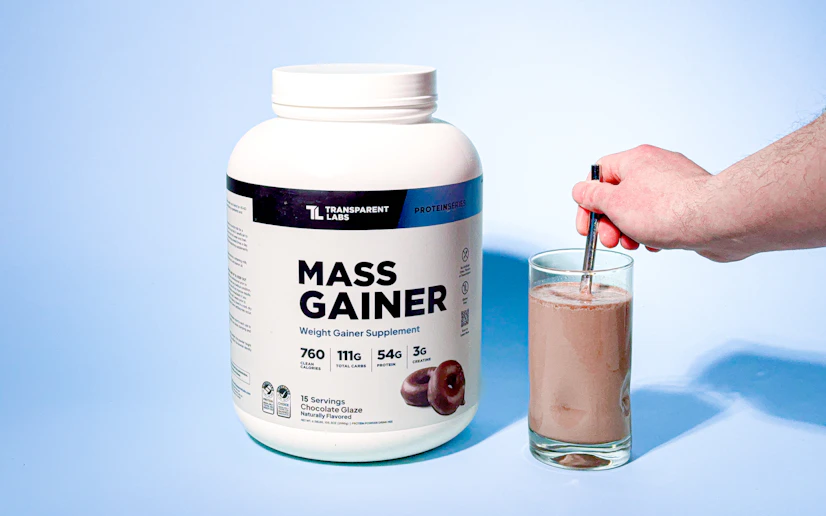
Photo by Innerbody Research
Catalog-wide, Transparent Labs has always had flavors that were fine. Nothing in the lineup has ever jumped out at us as being especially delicious, but nothing has ever been unpleasant either. Safe is the word that comes to mind. If that appeals to you, then Transparent Labs is the right pick. But you might still end up a little disappointed.
One product that we can say was a slight and pleasant surprise was Creatine HMB. HMB can add an unpleasant taste to a drink mix, but that was not the case with this product. Now, that may be due to the fact that Transparent Labs employs roughly half the most-studied effective dose, but it’s still noteworthy in a lineup of flavors that ride the rails of mediocrity.
Transparent Labs pricing, shipping, and returns
If you put together all five supplements in this stack, the price gets a little high, coming in at $270 for a one-time purchase and $243 for a subscription. None of the other recommended stacks in our guide break the $200 price point for subscribers, making the cost here a noteworthy barrier.
It’s worth noting that Transparent Labs is tied for the highest free-shipping threshold in our guide, at $100. There’s also no money-back guarantee. Compared to the 60-day policies of Wellah and Kaged, that earns Transparent Labs another demerit.
Naked Nutrition Collagen Peptides

Photo by Innerbody Research
Pros
- Available as bovine or marine collagen
- Multiple flavor options
- Bovine collagen is grass-fed
- Marine collagen is wild-caught
- Excellent price for the quality
- Also available as a creamer
- NSF-certified contents
Cons
- “Advanced” formula contains unproven ingredients
- Third-party test results are not shared
Naked is only part of this guide for its collagen contribution, though it does offer mass gainers and other supplements we would seriously consider as part of effective muscle-building stacks. Unfortunately, its pre-workout is underdosed, its glutamine and creatine supplements stand alone (as opposed to the combined supplements from Transparent Labs and others), and its best mass gainer was recently exposed to contain unsafe levels of lead per California’s guidelines.
With all that in mind, we felt it best to identify the one product in Naked’s lineup that makes sense as a standalone offering and has NSF certification against that kind of contamination. That is the company’s collagen peptides.
You can get Naked’s collagen peptides sourced from cows or fish, depending on your preference. Both deliver plentiful collagen, and neither has a noticeable flavor in either direction. You can also get a collagen creamer in Vanilla, Mocha, or Caramel flavors if you don’t mind some added ingredients, including cane sugar.
Naked Collagen pricing, shipping, and returns
Naked sells these three collagen products as one-time purchases or on a subscription basis for the following prices:
| One-time $ | Subscription $ | One-time $ per dose | Subscription $ per dose | |
|---|---|---|---|---|
| Bovine collagen | $42.00 | $33.60 | $0.70 | $0.56 |
| Marine collagen | $50.00 | $40.00 | $1.06 | $0.85 |
| Collagen creamer | $50.00 | $40.00 | $1.25 | $1.00 |
Naked has a free-shipping threshold of $99, but it doesn’t provide free shipping for subscribers. Naked also has the strictest return policy in our guide, only accepting unopened items and only for 14 days after they arrive.
Muscle-building stacks FAQ
Sources
Innerbody uses only high-quality sources, including peer-reviewed studies, to support the facts within our articles. Read our editorial process to learn more about how we fact-check and keep our content accurate, reliable, and trustworthy.
Carbone, J. W., & Pasiakos, S. M. (2019). Dietary Protein and Muscle Mass: Translating Science to Application and Health Benefit. Nutrients, 11(5).
Soffritti, M., Padovani, M., Tibaldi, E., Falcioni, L., Manservisi, F., Lauriola, M., Bua, L., Manservigi, M., & Belpoggi, F. (2016). Sucralose administered in feed, beginning prenatally through lifespan, induces hematopoietic neoplasias in male swiss mice. International Journal of Occupational and Environmental Health, 22(1), 7-17.
Schiffman, S. S., & Rother, K. I. (2013). Sucralose, A Synthetic Organochlorine Sweetener: Overview of Biological Issues. Journal of Toxicology and Environmental Health. Part B, Critical Reviews, 16(7), 399-451.
Wolfe, R. R. (2016). Branched-chain amino acids and muscle protein synthesis in humans: Myth or reality? Journal of the International Society of Sports Nutrition, 14.
Candow, D. G., Ostojic, S. M., Forbes, S. C., & Antonio, J. (2024). Does one dose of creatine supplementation fit all? Advanced Exercise and Health Science, 1(2), 99-107.
Wilson, G. J., Wilson, J. M., & Manninen, A. H. (2007). Effects of beta-hydroxy-beta-methylbutyrate (HMB) on exercise performance and body composition across varying levels of age, sex, and training experience: A review. Nutrition & Metabolism, 5, 1.
Kreider, R. B., Gonzalez, D. E., Hines, K., Gil, A., & Bonilla, D. A. (2025). Safety of creatine supplementation: Analysis of the prevalence of reported side effects in clinical trials and adverse event reports. Journal of the International Society of Sports Nutrition, 22(Suppl 1), 2488937.
Vlahoyiannis, A., Aphamis, G., Andreou, E., Samoutis, G., Sakkas, G. K., & Giannaki, C. D. (2018). Effects of High vs. Low Glycemic Index of Post-Exercise Meals on Sleep and Exercise Performance: A Randomized, Double-Blind, Counterbalanced Polysomnographic Study. Nutrients, 10(11).
Badmaev, V., Majeed, M., & Prakash, L. (2000). Piperine derived from black pepper increases the plasma levels of coenzyme Q10 following oral supplementation. The Journal of nutritional biochemistry, 11(2), 109–113.
McGlory, C., Calder, P. C., & Nunes, E. A. (2018). The Influence of Omega-3 Fatty Acids on Skeletal Muscle Protein Turnover in Health, Disuse, and Disease. Frontiers in Nutrition, 6.
Zamir, A., Ben-Zeev, T., & Hoffman, J. R. (2021). Manipulation of Dietary Intake on Changes in Circulating Testosterone Concentrations. Nutrients, 13(10), 3375.
Arazi, H., Aboutalebi, S., Taati, B., Cholewa, J. M., & Candow, D. G. (2022). Effects of short-term betaine supplementation on muscle endurance and indices of endocrine function following acute high-intensity resistance exercise in young athletes. Journal of the International Society of Sports Nutrition, 19(1), 1.
Ivy, J. L. (2004). Regulation of Muscle Glycogen Repletion, Muscle Protein Synthesis and Repair Following Exercise. Journal of Sports Science & Medicine, 3(3), 131.
Smith, S. J., Lopresti, A. L., Teo, S. Y. M., & Fairchild, T. J. (2021). Examining the Effects of Herbs on Testosterone Concentrations in Men: A Systematic Review. Advances in Nutrition, 12(3), 744-765.
Houston, M., & Hays, L. (2014). Acute Effects of an Oral Nitric Oxide Supplement on Blood Pressure, Endothelial Function, and Vascular Compliance in Hypertensive Patients. The Journal of Clinical Hypertension, 16(7), 524.
Sharma, A. K., Basu, I., & Singh, S. (2018). Efficacy and Safety of Ashwagandha Root Extract in Subclinical Hypothyroid Patients: A Double-Blind, Randomized Placebo-Controlled Trial. Journal of Alternative and Complementary Medicine (New York, N.Y.), 24(3), 243–248.
Kamal, H. I., Patel, K., Brdak, A., Heffernan, J., & Ahmad, N. (2022). Ashwagandha as a Unique Cause of Thyrotoxicosis Presenting With Supraventricular Tachycardia. Cureus, 14(3), e23494.
Martinau, P., (2025, October 14). Protein Powders and Shakes Contain High Levels of Lead. Consumerreports.org.
Khatri, M., Naughton, R. J., Clifford, T., Harper, L. D., & Corr, L. (2021). The effects of collagen peptide supplementation on body composition, collagen synthesis, and recovery from joint injury and exercise: A systematic review. Amino Acids, 53(10), 1493.
Lopresti, A. L., Drummond, P. D., & Smith, S. J. (2019). A Randomized, Double-Blind, Placebo-Controlled, Crossover Study Examining the Hormonal and Vitality Effects of Ashwagandha (Withania somnifera) in Aging, Overweight Males. American Journal of Men's Health, 13(2), 1557988319835985.
Pérez-Guisado, J., & Jakeman, P. M. (2010). Citrulline malate enhances athletic anaerobic performance and relieves muscle soreness. Journal of Strength and Conditioning Research, 24(5), 1215–1222.
Dattilo, M., Antunes, H. K., Medeiros, A., Mônico Neto, M., Souza, H. S., Tufik, S., & de Mello, M. T. (2011). Sleep and muscle recovery: endocrinological and molecular basis for a new and promising hypothesis. Medical Hypotheses, 77(2), 220–222.
Papatriantafyllou, E., Efthymiou, D., Zoumbaneas, E., Popescu, C. A., & Vassilopoulou, E. (2022). Sleep Deprivation: Effects on Weight Loss and Weight Loss Maintenance. Nutrients, 14(8), 1549.
Scott, A. J., Webb, T. L., Martyn-St James, M., Rowse, G., & Weich, S. (2021). Improving sleep quality leads to better mental health: A meta-analysis of randomised controlled trials. Sleep Medicine Reviews, 60.
Costello, R. B., Lentino, C. V., Boyd, C. C., Crawford, C. C., Sprengel, M. L., & Deuster, P. A. (2013). The effectiveness of melatonin for promoting healthy sleep: A rapid evidence assessment of the literature. Nutrition Journal, 13.
Dietz, B. M., Mahady, G. B., Pauli, G. F., & Farnsworth, N. R. (2005). Valerian extract and valerenic acid are partial agonists of the 5-HT5a receptor in vitro. Brain research. Molecular Brain Research, 138(2), 191.
Liu, L., Zhang, N., Tong, Y., Sun, Y., Zhu, H., Cao, Y., Zhang, J., Huang, H., Niu, B., Li, H., Guo, H., Gao, Y., Zhu, L., & Li, Y. (2017). The effectiveness of zinc supplementation in men with isolated hypogonadotropic hypogonadism. Asian Journal of Andrology, 19(3), 280-285.
Johannsen, N. M., Lind, E., King, D. S., & Sharp, R. L. (2009). Effect of preexercise electrolyte ingestion on fluid balance in men and women. Medicine and Science in Sports and Exercise, 41(11), 2017–2025.
Yang, T., Lin, W., Chuang, Y., Wang, C., Huang, H., & Chan, H. (2022). Effects of 6-Week Betaine Supplementation on Muscular Performance in Male Collegiate Athletes. Biology, 11(8), 1140.
Burke, R., Piñero, A., Coleman, M., Mohan, A., Sapuppo, M., Augustin, F., Aragon, A. A., Candow, D. G., Forbes, S. C., Swinton, P., & Schoenfeld, B. J. (2023). The Effects of Creatine Supplementation Combined with Resistance Training on Regional Measures of Muscle Hypertrophy: A Systematic Review with Meta-Analysis. Nutrients, 15(9), 2116.
Ribeiro, A. S., Avelar, A., Kassiano, W., Nunes, J. P., Schoenfeld, B. J., Aguiar, A. F., Trindade, M. C. C., Silva, A. M., Sardinha, L. B., & Cyrino, E. S. (2020). Creatine Supplementation Does Not Influence the Ratio Between Intracellular Water and Skeletal Muscle Mass in Resistance-Trained Men. International Journal of Sport Nutrition and Exercise Metabolism, 30(6), 405–411.
Trommelen, J., Nyakayiru, J., Holwerda, A. M., Smeets, J. S., Hendriks, F. K., Zorenc, A. H., Senden, J. M., Goessens, J. P., & Gijsen, A. P. (2023). The anabolic response to protein ingestion during recovery from exercise has no upper limit in magnitude and duration in vivo in humans. Cell Reports Medicine, 4(12), 101324.
Ra, S. G., Miyazaki, T., Kojima, R., Komine, S., Ishikura, K., Kawanaka, K., Honda, A., Matsuzaki, Y., & Ohmori, H. (2018). Effect of BCAA supplement timing on exercise-induced muscle soreness and damage: a pilot placebo-controlled double-blind study. The Journal of Sports Medicine and Physical Fitness, 58(11), 1582–1591.
Trexler, E. T., Smith-Ryan, A. E., Stout, J. R., Hoffman, J. R., Wilborn, C. D., Sale, C., Kreider, R. B., Jäger, R., Earnest, C. P., Bannock, L., Campbell, B., Kalman, D., Ziegenfuss, T. N., & Antonio, J. (2015). International society of sports nutrition position stand: Beta-Alanine. Journal of the International Society of Sports Nutrition, 12, 30.
Gonzalez, A. M., Yang, Y., Mangine, G. T., Pinzone, A. G., Ghigiarelli, J. J., & Sell, K. M. (2023). Acute Effect of L-Citrulline Supplementation on Resistance Exercise Performance and Muscle Oxygenation in Recreationally Resistance Trained Men and Women. Journal of Functional Morphology and Kinesiology, 8(3), 88.
Viribay, A., Fernández-Landa, J., Castañeda-Babarro, A., Collado, P. S., Fernández-Lázaro, D., & Mielgo-Ayuso, J. (2022). Effects of Citrulline Supplementation on Different Aerobic Exercise Performance Outcomes: A Systematic Review and Meta-Analysis. Nutrients, 14(17), 3479.
Koozehchian, M. S., Daneshfar, A., Fallah, E., Agha-Alinejad, H., Samadi, M., Kaviani, M., B, M. K., Jung, Y. P., Sablouei, M. H., Moradi, N., Earnest, C. P., Chandler, T. J., & Kreider, R. B. (2018). Effects of nine weeks L-Carnitine supplementation on exercise performance, anaerobic power, and exercise-induced oxidative stress in resistance-trained males. Journal of Exercise Nutrition & Biochemistry, 22(4), 7.
Mielgo-Ayuso, J., Pietrantonio, L., Viribay, A., Calleja-González, J., González-Bernal, J., & Fernández-Lázaro, D. (2021). Effect of Acute and Chronic Oral l-Carnitine Supplementation on Exercise Performance Based on the Exercise Intensity: A Systematic Review. Nutrients, 13(12), 4359.
Guest, N. S., VanDusseldorp, T. A., Nelson, M. T., Grgic, J., Schoenfeld, B. J., M Jenkins, N. D., Arent, S. M., Antonio, J., Stout, J. R., Trexler, E. T., Smith-Ryan, A. E., Goldstein, E. R., Kalman, D. S., & Campbell, B. I. (2021). International society of sports nutrition position stand: Caffeine and exercise performance. Journal of the International Society of Sports Nutrition, 18, 1.
Viribay, A., Burgos, J., Fernández-Landa, J., Seco-Calvo, J., & Mielgo-Ayuso, J. (2020). Effects of Arginine Supplementation on Athletic Performance Based on Energy Metabolism: A Systematic Review and Meta-Analysis. Nutrients, 12(5), 1300.
Kaczka, P., Michalczyk, M. M., Jastrząb, R., Gawelczyk, M., & Kubicka, K. (2019). Mechanism of Action and the Effect of Beta-Hydroxy-Beta-Methylbutyrate (HMB) Supplementation on Different Types of Physical Performance - A Systematic Review. Journal of Human Kinetics, 68, 211.
Legault, Z., Bagnall, N., & Kimmerly, D. S. (2015). The Influence of Oral L-Glutamine Supplementation on Muscle Strength Recovery and Soreness Following Unilateral Knee Extension Eccentric Exercise. International Journal of Sport Nutrition and Exercise Metabolism, 25(5), 417–426.
Córdova-Martínez, A., Caballero-García, A., Bello, H. J., Pérez-Valdecantos, D., & Roche, E. (2021). Effect of Glutamine Supplementation on Muscular Damage Biomarkers in Professional Basketball Players. Nutrients, 13(6), 2073.
Maestre-Hernández, A. B., Pérez-Piñero, S., López-Román, F. J., Andreu-Caravaca, L., Luque-Rubia, A. J., Ramos-Campo, D. J., Díaz-Silvestre, M. J., & Ávila-Gandía, V. (2023). Effect of a sustained-release formulation of β-alanine on laboratory parameters and paresthesia in recreational trained men: A randomized double-blind placebo-controlled study. Frontiers in Nutrition, 10, 1213105.
Gough, L. A., Sparks, S. A., McNaughton, L. R., Higgins, M. F., Newbury, J. W., Trexler, E., Faghy, M. A., & Bridge, C. A. (2021). A critical review of citrulline malate supplementation and exercise performance. European Journal of Applied Physiology, 121(12), 3283.
Sharma, A., Chabloz, S., Lapides, R. A., Roider, E., & Ewald, C. Y. (2023). Potential Synergistic Supplementation of NAD+ Promoting Compounds as a Strategy for Increasing Healthspan. Nutrients, 15(2), 445.
Nobari, H., Cholewa, J. M., Castillo-Rodríguez, A., Kargarfard, M., & Pérez-Gómez, J. (2021). Effects of chronic betaine supplementation on performance in professional young soccer players during a competitive season: A double blind, randomized, placebo-controlled trial. Journal of the International Society of Sports Nutrition, 18, 67.
Tarsitano, M. G., Quinzi, F., Folino, K., Greco, F., Oranges, F. P., Cerulli, C., & Emerenziani, G. P. (2024). Effects of magnesium supplementation on muscle soreness in different type of physical activities: A systematic review. Journal of Translational Medicine, 22, 629.
Ramos-Jiménez, A., Hernández-Torres, R. P., Hernández-Ontiveros, D. A., Ortiz-Ortiz, M., López-Fregoso, R. J., Martínez-Sanz, J. M., Rodríguez-Uribe, G., & Hernández-Lepe, M. A. (2024). An Update of the Promise of Glycine Supplementation for Enhancing Physical Performance and Recovery. Sports, 12(10), 265.
Dehghani, E., Naeini, F., Bidar, S. S., Beba, M., Mortezapour, E., Nourian, R., Danandeh, K., Dezfuli, Z. G., & Djafarian, K. (2025). The effect of taurine supplementation on markers of muscle damage and muscle pain in an athletic population: A systematic review and meta-analysis of randomized controlled trials assessed using the grading of recommendations, assessment, development, and evaluation approach. Heliyon, 11(13), e43622.
Chen, Q., Li, Z., Pinho, R. A., Gupta, R. C., Ugbolue, U. C., Thirupathi, A., & Gu, Y. (2021). The Dose Response of Taurine on Aerobic and Strength Exercises: A Systematic Review. Frontiers in Physiology, 12, 700352.
Prowting, J. L., Bemben, D., Black, C. D., Day, E. A., & Campbell, J. A. (2021). Effects of Collagen Peptides on Recovery Following Eccentric Exercise in Resistance-Trained Males-A Pilot Study. International Journal of Sport Nutrition and Exercise Metabolism, 31(1), 32–39.
Nissen, S., Sharp, R., Ray, M., Rathmacher, J. A., Rice, D., Fuller, J. C., Jr, Connelly, A. S., & Abumrad, N. (1996). Effect of leucine metabolite beta-hydroxy-beta-methylbutyrate on muscle metabolism during resistance-exercise training. Journal of Applied Physiology (Bethesda, Md. : 1985), 81(5), 2095–2104.
National Center for Health Statistics. (2025, June). Vital and Health Statistics. Anthropometric Reference Data for Children and Adults: United States, August 2021–August 2023. Centers for Disease Control and Prevention.
Fitzgerald, T., & Vietri, J. (2015). Residual Effects of Sleep Medications Are Commonly Reported and Associated with Impaired Patient-Reported Outcomes among Insomnia Patients in the United States. Sleep Disorders, 2015, 607148.
READ THIS NEXT



Copyright © Innerbody Research 1997 - 2025. All Rights Reserved.